RFID Bike Tracking, Explained: How Bikes Are Tracked in Transit
RFID bike tracking uses a small chip embedded in the shipping label to identify and locate a bike as it moves through a carrier’s network. Unlike a barcode, an RFID label can be read wirelessly and from a distance, without needing to be seen by a scanner. The result is more frequent, more accurate location updates and no moments when the package is not visible to tracking infrastructure.
- Barcode scan
- RFID read
- Often missed
- Not visible in tracking
On many bike shipments the first barcode scan is at the destination facility. UPS has put RFID readers at the ends of the journey first, in UPS Store locations and package cars, and plans to add them across its facility network over the next few years.
Why bike shipments are a hard tracking problem
A boxed bike is an awkward parcel. It is long, (hopefully) light for its size and frequently too big to ride the automated sorting belts. Parcels that leave the automated system are handled manually, and manual handling is exactly where barcode scans get missed.
Handling by humans is exactly why a bike shipment can sit for a day or more without a tracking update while a smaller parcel that came into the sorting facility on the same truck can be updated multiple times. While the bike may be moving, if it hasn’t been scanned, it looks like it’s stuck at the sorting facility.
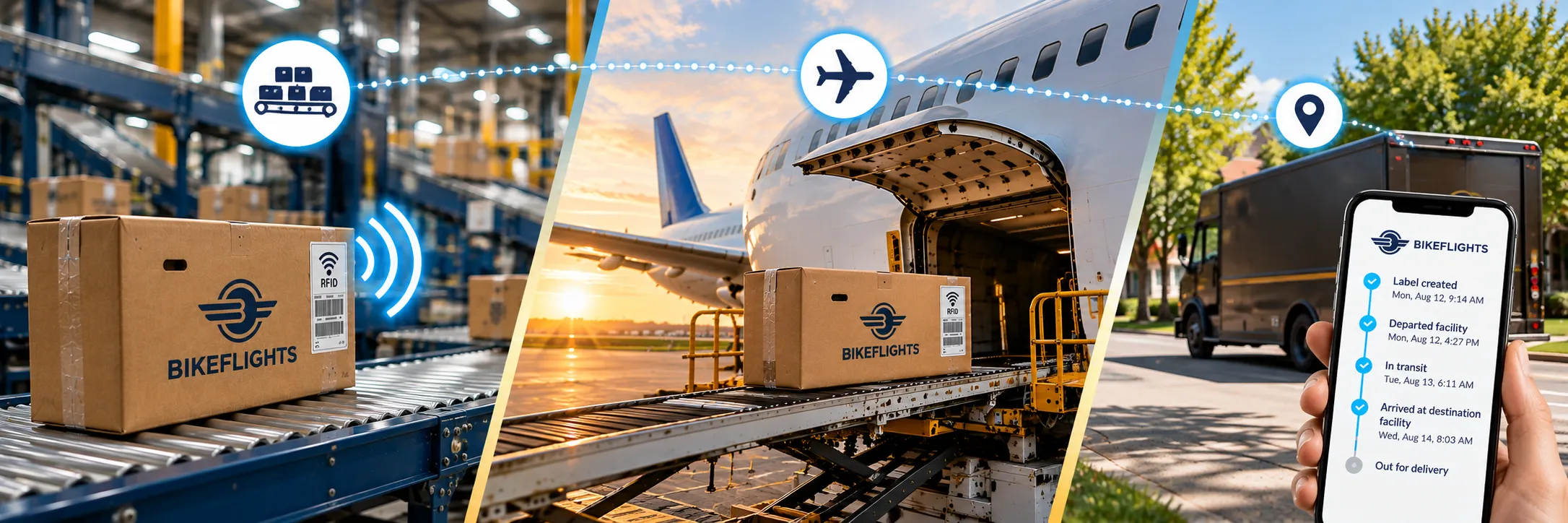
Why RFID is Better
An RFID label does not have to be located, aimed at and scanned. A reader positioned at a strategic point or points energizes the chip as the parcel passes and captures its unique ID automatically. The parcel is identified whether it is on a belt, on a cart, at the bottom of a stack, or facing the wrong way.
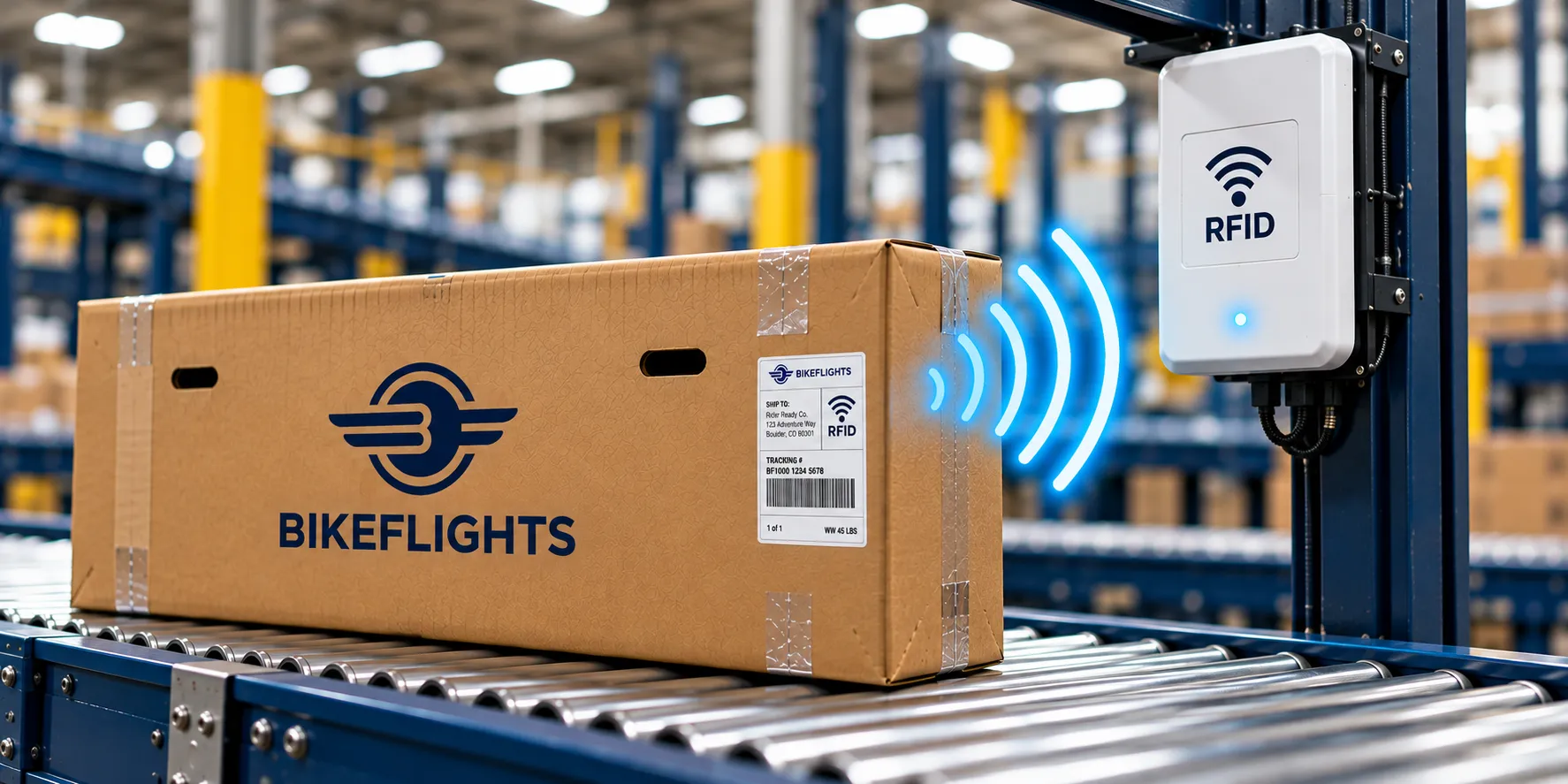
What RFID Does Not Do
RFID is not satellite tracking. It does not show a bike or other parcel moving down the highway on a truck in real time. It reports where a shipment was when it last passed a reader. What RFID improves is how often and how reliably those scans or reports happen.
Read in order
- How RFID Bike Tracking WorksAn RFID label carries a chip that transmits its ID when it passes a reader. Here’s how each read becomes a tracking update on a bike shipment.
- RFID vs. Barcode vs. GPS TrackingBarcodes need line of sight. RFID does not. GPS runs on a battery. An honest comparison of all three tracking methods for shipping a bicycle.
- Tracking Your Bike Shipment: What You Can See and WhenWhat RFID tracking shows on a bike shipment, when updates appear, why tracking sometimes goes quiet, and how to request an RFID label for your bike.
- The First RFID-Tracked Bike ShipmentsIn June 2026, Bikeflights became the first bicycle shipping company to offer built-in RFID tracking, in collaboration with UPS. Here is how it began.
- RFID Bike Shipping and Tracking: Frequently Asked QuestionsShort answers to common questions about RFID bike tracking: how it works, how it differs from barcodes and GPS, and where RFID tracking is available.